

Pure 24K gold is too soft for everyday jewelry. With a Vickers hardness of just 25–30 HV — comparable to a fingernail — it scratches easily, deforms under normal stress, and cannot reliably hold gemstones in prong settings. That’s why fine jewelry is made from 14K or 18K gold alloys, which are 5–6 times harder and far more durable for daily wear.
Quick Answer
- 24K gold has a hardness of ~25 HV — sand, ceramics, and even some plastics will scratch it
- Its yield strength (40–50 MPa) is so low that rings deform, prongs bend, and clasps fail under normal use
- 14K gold is 5–6x harder and can withstand 4–6x more stress before permanent deformation
- Pure gold can work for low-stress pieces (earrings, pendants) but not rings, bracelets, or anything with gemstone settings
- Some cultures use 22K–24K gold by design — with thicker gauge, simpler settings, and hollow construction to compensate
Part of the DEEVE Complete Guide to Gold Jewelry — this article expands the section on Gold Purity: Karats Explained.
If you are choosing a piece now, our gold chains are alloyed to 14K or 18K gold, never left at pure 24K.
24K vs 14K Gold: What the Numbers Mean
Hardness: 25–30 HV
Yield strength: 40–50 MPa
Scratch resistance: Very low
Prong reliability: Unsuitable
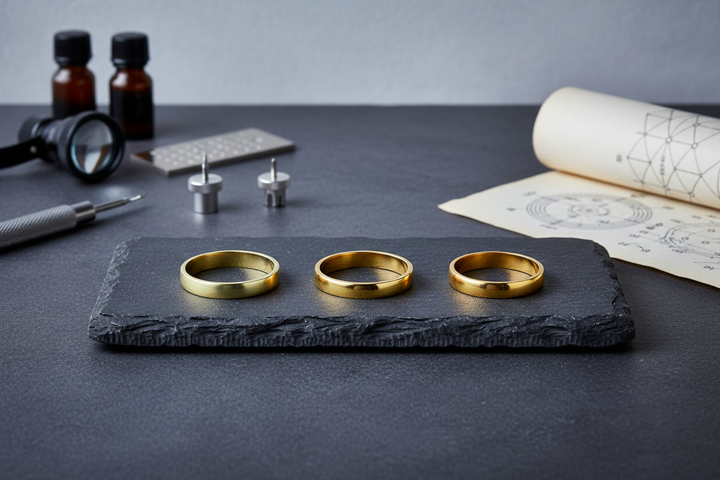
Hardness: 125–165 HV
Yield strength: 180–240 MPa
Scratch resistance: Moderate
Prong reliability: Good
Hardness: 135–200 HV
Yield strength: 220–320 MPa
Scratch resistance: Moderate-High
Prong reliability: Excellent
Source: Materials science data. See full comparison in the Expert Breakdown below.
 Mentioned in this piece
Polished Miami Cuban Chain Necklace in 14K Yellow Gold | 8.0mm
$7,990.00
View the piece
Mentioned in this piece
Polished Miami Cuban Chain Necklace in 14K Yellow Gold | 8.0mm
$7,990.00
View the piece
When Pure Gold Makes Sense — and When It Doesn’t
Stud earrings (supported by ear, minimal abrasion), pendants (hang freely, avoid surface contact), ceremonial or symbolic pieces worn rarely, collector and museum-grade items, investment bullion jewelry
Rings (daily abrasion, impact), bracelets (contact with surfaces), prong-set gemstone jewelry, clasps and hinges (require spring tension), any piece worn daily
Why Alloying Solves the Problem
When gold is alloyed with metals like copper, silver, palladium, or zinc, the resulting material is dramatically harder and stronger. The added atoms disrupt gold’s crystal lattice, making it harder for dislocations to move — which is what causes deformation in pure metals.
14K gold (58.5% pure gold) achieves hardness of 135–200 HV — enough to hold gemstones securely in prong settings, resist everyday scratching, and maintain its shape through years of wear.
All DEEVE pieces are crafted in solid 14K gold — properly alloyed for durability, never plated, never filled. Browse Rings, Bracelets, and Diamond Rings — all with a lifetime warranty.
Common Misconceptions About Pure Gold
- “Higher karat = better jewelry” — Higher karat means more gold content, not better durability. For everyday wear, 14K outperforms 24K in every structural measure.
- “24K gold won’t tarnish so it’s better” — True that pure gold doesn’t tarnish, but 14K and 18K gold alloys are also highly tarnish-resistant in practice. The durability trade-off is worth it.
- “Pure gold is more valuable as jewelry” — Pure gold has higher intrinsic metal value, but as jewelry it wears out faster, requires more material to compensate for softness, and costs more to maintain.
- “Work hardening fixes the softness problem” — Work hardening can raise pure gold’s hardness to 50–60 HV, but this is still far below the 100–120 HV minimum for reliable prong settings, and annealing reverses it entirely.
Explore related expert resources from Arta Talachian:
Gold Education Hub → All Guides → 14K vs 18K vs 24K Comparison → About the Author →Want the full technical breakdown? Continue below for a detailed materials science analysis covering Vickers hardness, yield strength, crystal structure, deformation mechanics, and cultural exceptions — authored by Arta Talachian, Master Goldsmith & Certified Gemologist.
Expert Breakdown: Why Pure Gold Is Rarely Used in Everyday Jewelry
Mechanical Properties of Pure Gold
Vickers Hardness and Yield Strength
Pure 24K gold exhibits a Vickers hardness of approximately 25–30 HV, placing it among the softest metals used in jewelry. For context, this is comparable to the hardness of a fingernail (Mohs 2.5). The yield strength of annealed pure gold ranges from 40–50 MPa, meaning it begins to deform permanently under relatively low stress.
These low values reflect gold’s face-centered cubic (FCC) crystal structure and the ease with which dislocations — linear defects in the crystal lattice — can move through the material. When stress is applied, atomic planes slide past one another with minimal resistance, resulting in permanent shape change.
Malleability and Ductility Measurements
Gold is the most malleable metal known. A single gram of pure gold can be beaten into a sheet covering approximately one square meter, with thickness reduced to ~0.1 micrometers (100 nanometers). This extreme malleability, while valuable for goldsmithing and gilding, creates problems for jewelry that must maintain precise dimensions.
Ductility — the ability to be drawn into wire — is similarly exceptional. Pure gold can be drawn into wire finer than human hair without breaking. While useful for chain-making, this property means pure gold components lack the stiffness needed for structural jewelry elements like prongs, clasps, or hinges.
Scratch and Abrasion Resistance
Pure gold’s low hardness translates to poor scratch resistance. Materials harder than ~30 HV — including many common substances like sand (quartz, ~800 HV), ceramic, and even some plastics — will scratch pure gold surfaces. Daily activities involving contact with hard surfaces rapidly degrade the finish of 24K jewelry.
Abrasive wear occurs through micro-cutting and plowing mechanisms. Harder particles or surfaces remove gold atoms from the jewelry surface, creating visible scratches and gradually reducing mass. Unlike harder alloys that resist this process, pure gold shows measurable wear within days of normal use. For a full comparison of how alloying improves these properties, see our gold alloy composition guide.
Structural Limitations in Jewelry Applications
Prong Retention and Stone Security
Prong settings rely on elastic deformation — the ability of metal to bend slightly under stress and return to its original shape. Pure gold’s low yield strength means prongs deform plastically (permanently) under the modest forces encountered during wear. Gemstones become loose as prongs bend outward, creating risk of stone loss.
Industry standards typically require minimum hardness values of 100–120 HV for reliable prong settings. Pure gold falls far below this threshold, making it unsuitable for any setting that must securely hold gemstones through years of wear.

Band Thickness Requirements
To compensate for pure gold’s softness, ring bands must be substantially thicker than equivalent 14K or 18K designs. A 14K ring band might measure 1.5–2mm in thickness, while a 24K band performing the same function would require 3–4mm or more. This increased mass raises material costs and can make designs uncomfortably heavy or visually disproportionate.
Clasp and Hinge Durability
Mechanical components like clasps, hinges, and jump rings experience repeated stress cycles. Pure gold’s tendency toward plastic deformation means these components lose tension, become misaligned, or fail entirely after relatively few cycles. Spring-loaded clasps, in particular, require work-hardened or alloyed metals to maintain function.

Deformation Under Normal Wear Conditions
Plastic vs. Elastic Deformation
When stress is applied to metal, it initially deforms elastically — returning to its original shape when stress is removed. Beyond the yield point, deformation becomes plastic (permanent). Pure gold’s low yield strength (40–50 MPa) means even modest forces cause permanent deformation.
For comparison, 14K gold alloys have yield strengths of 220–320 MPa, allowing them to withstand 4–6 times more stress before permanent deformation occurs. This difference is critical for jewelry that experiences impacts, pressure, or bending forces during daily wear. See our full 14K vs 18K vs 24K gold durability comparison.
Work Hardening in Pure Metals
Work hardening (strain hardening) occurs when plastic deformation increases dislocation density, making further deformation more difficult. Pure gold can be work-hardened through hammering, rolling, or drawing, increasing hardness to 50–60 HV. However, this effect is limited compared to alloys, and annealing (heating) reverses work hardening, returning the metal to its soft state.
Shape Retention Over Time
Pure gold jewelry gradually changes shape through accumulated micro-deformations. Rings become oval rather than round, bracelets lose their curve, and chains develop kinks. While these changes can be corrected through reshaping, the process removes metal and eventually compromises structural integrity.
Cultural and Regional Exceptions
24K Gold in South and Southeast Asian Traditions
In India, China, Thailand, and other Asian markets, 22K and 24K gold jewelry holds cultural and religious significance. High-purity gold is associated with auspiciousness, purity, and wealth preservation. Designs compensate for softness through:
- Heavier gauge construction (thicker walls and bands)
- Simpler designs avoiding delicate details
- Hollow construction to reduce weight while maintaining visual presence
- Preference for low-stress jewelry types (bangles, necklaces, earrings)
Investment-Grade Bullion Jewelry
Some jewelry is explicitly designed as wearable bullion — prioritizing gold content over durability. These pieces trade at premiums closely tied to gold spot price and serve dual purposes as adornment and portable wealth. Wearability is secondary to gold purity and weight.
Design Adaptations for High-Karat Gold
Skilled goldsmiths working with 22K or 24K gold employ specific techniques:
- Granulation and filigree that distribute stress across many small elements
- Hollow construction reducing weight without sacrificing visual impact
- Avoiding thin sections, sharp corners, or stress concentrators
- Using mechanical connections rather than spring-loaded clasps
When Pure Gold Is Appropriate
Low-Stress Applications (Earrings, Pendants)
Jewelry types experiencing minimal mechanical stress can successfully use pure gold:
- Stud earrings: Supported by the ear, experiencing little abrasion
- Pendants: Hanging freely, avoiding surface contact
- Brooches: Pinned to fabric, protected from hard surfaces
Even in these applications, findings (posts, clasps, pins) are often made from harder alloys to ensure functionality.
Symbolic and Ceremonial Pieces
Jewelry worn infrequently for ceremonial purposes can prioritize purity over durability. Wedding jewelry in some cultures, religious items, and commemorative pieces may be crafted in 24K gold despite limited wearability, as their symbolic value outweighs practical concerns.
Collector and Museum-Grade Items
Historical reproductions, art jewelry, and collector pieces may use pure gold to maintain authenticity or achieve specific aesthetic effects. These items are typically displayed rather than worn, eliminating durability concerns.
Mechanical Property Comparison
| Property | 24K Gold | 18K Gold | 14K Gold | Platinum 950 |
|---|---|---|---|---|
| Vickers Hardness (HV) | 25–30 | 125–165 | 135–200 | 40–135 |
| Tensile Strength (MPa) | 120–140 | 250–350 | 300–450 | 125–200 |
| Yield Strength (MPa) | 40–50 | 180–240 | 220–320 | 60–150 |
| Elongation (%) | 40–50 | 15–25 | 10–20 | 25–35 |
| Scratch Resistance | Very Low | Moderate | Moderate-High | Low-Moderate |
Related Articles
- 14K vs 18K vs 24K Gold: Durability, Wear Resistance & Longevity Compared
- The Science of Gold Hardness: Beyond the Mohs Scale
- What Makes Gold Jewelry Heirloom Quality?
- Gold Alloy Composition: Strength, Color & Wear Properties
- Gold Jewelry Wear Over Time: Karat, Abrasion & Maintenance
- Gold Education Hub — All Guides
- Gold Jewelry FAQ — Complete Guide
- Gold Durability FAQ
This guide was authored by Arta Talachian, Master Goldsmith & Certified Gemologist with 25+ years of experience in fine jewelry design, crafting, and appraisal. For more expert resources, visit the Jewelry Guides Hub or Gold Education Hub.
Shop Solid 14K Gold — Built to Last
Every DEEVE piece is properly alloyed 14K gold — 5–6x harder than pure gold, never plated, never filled. Lifetime warranty and free shipping to Canada and the US.



0 comments