
Sapphires and rubies are the most durable colored gemstones in fine jewelry — rated 9 on the Mohs scale, second only to diamonds. They are low-maintenance, safe for ultrasonic cleaning (with exceptions for treated stones), and suitable for daily wear. The key rule: know your stone’s treatment status before using ultrasonic or steam cleaning, as fracture-filled rubies and diffusion-treated sapphires require gentler care.
Quick Answer: Sapphire & Ruby Care Essentials
- Hardness: 9 on the Mohs scale — second only to diamonds. Highly resistant to scratching and suitable for daily wear
- Clean every 1–2 weeks (daily wear) with warm water + mild dish soap + soft toothbrush
- Ultrasonic cleaning: Safe for heat-treated stones (the majority) — NOT safe for fracture-filled rubies, diffusion-treated sapphires, or star stones
- Remove before: Heavy manual work, contact sports, chlorinated pools
- Store separately from softer gemstones (emeralds, pearls, turquoise) and from diamonds
- Annual professional inspection — prong check, setting security, stone examination
- Rubies: More commonly fracture-filled than sapphires — always check treatment status before aggressive cleaning
Step-by-Step: Cleaning Sapphire & Ruby Jewelry at Home
Safe for heat-treated sapphires and rubies (approximately 95% of stones on the market). If you are unsure of your stone’s treatment, use this method — it is always safe.
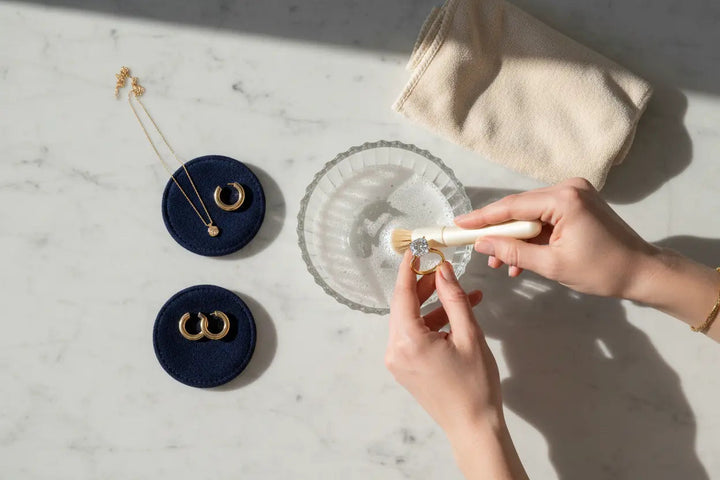
Mix warm water with a few drops of mild dish soap in a small bowl. Avoid dish soaps with moisturizers or degreasers.
Longer than gold-only pieces — the extra soak time loosens oils and dirt from around settings and the back of the stone.
Focus on around prongs, under the stone, and in crevices where dirt accumulates. Use circular motions with minimal pressure.
Close the drain or use a strainer. Hold pieces securely.
Pat with a lint-free cloth, then air dry before storing. Use this opportunity to inspect for loose stones or worn prongs.
Cleaning frequency: Every 1–2 weeks for daily-wear pieces, weekly for engagement rings, before and after occasional wear.
Ultrasonic & Steam Cleaning: What’s Safe?
This is the most important decision point for sapphire and ruby care. The answer depends entirely on your stone’s treatment status.
Natural untreated sapphires and rubies • Heat-treated sapphires and rubies (the majority) • Stones with minimal inclusions • Securely set stones
Fracture-filled rubies (glass or resin-filled) • Diffusion-treated sapphires • Star sapphires and star rubies • Heavily included stones with visible fractures • Loose settings
When in doubt: Use gentle soap and water only. If you don’t have documentation of your stone’s treatment, assume it may be fracture-filled and clean gently. See our professional jewelry maintenance guide for when to seek expert cleaning.
Understanding Treatments: Why It Matters for Cleaning
| Treatment | How Common | Ultrasonic Safe? | Steam Safe? | Special Care |
|---|---|---|---|---|
| Heat treatment | ~95% of stones | ✅ Yes | ✅ Yes | None — permanent and stable |
| Fracture filling (glass/resin) | Common in rubies | ❌ No | ❌ No | Gentle soap + water only. Avoid temperature changes |
| Diffusion treatment | Some sapphires | ❌ No | ❌ No | Never re-polish (removes color layer) |
| No treatment (natural) | Rare, premium | ✅ Yes | ✅ Yes | None |
How to find out: Check your original purchase documentation or gemological certificate (GIA, AGS). Ask your jeweler. When in doubt, use gentle cleaning only.
How to Store Sapphire & Ruby Jewelry
Store each piece separately in a soft cloth pouch or fabric-lined compartment. Keep away from softer gemstones (emeralds, pearls, turquoise) that corundum can scratch. Store at stable room temperature.
Storing with diamonds (the only stone harder than corundum — can scratch sapphires/rubies). Storing with softer stones that corundum will scratch. Extreme temperature fluctuations for fracture-filled stones.
Explore related care guides:
Complete Jewelry Care Guide → Jewelry Care Hub → Emerald Care Guide → Warranty & Services →Want the full expert breakdown? Continue below for comprehensive coverage of corundum properties, care by jewelry type, color-specific considerations, damage assessment, and professional maintenance.
Complete Expert Guide: Sapphire & Ruby Care
Understanding Sapphires and Rubies
What Makes Corundum Special
Sapphires and rubies are both varieties of the mineral corundum, differing only in color. Their exceptional properties make them among the most practical gemstones for fine jewelry:
- Hardness: 9 on the Mohs scale (second only to diamonds at 10)
- Durability: Excellent toughness and resistance to scratching
- Chemical Composition: Aluminum oxide (Al₂O₃)
- Color Range: Rubies are red corundum; sapphires are all other colors (blue, pink, yellow, green, etc.)
- Treatments: Approximately 95% are heat-treated to enhance color and clarity
Why Sapphires and Rubies Are Ideal for Daily Wear
Unlike delicate gemstones like emeralds, pearls, or turquoise, sapphires and rubies can withstand daily wear and more aggressive cleaning methods. They are resistant to scratching from most materials, can tolerate ultrasonic and steam cleaning (with exceptions), and are suitable for engagement rings and everyday jewelry.
Since sapphires and rubies are typically set in 14K or 18K gold settings, it’s important to care for both the gemstone and the metal. Learn more in our Complete Guide to Caring for Fine Jewelry.
Daily Care and Wear Practices
When to Remove Sapphire and Ruby Jewelry
- Heavy manual work: Gardening, construction, moving furniture
- Contact sports: Risk of impact damage to settings
- Swimming in chlorinated pools: Chlorine can damage gold settings
- Applying harsh chemicals: Household cleaners, bleach
- Working with abrasive materials: Sandpaper, concrete, metal files
Safe for Wearing During
Unlike delicate gemstones, sapphires and rubies can be worn during showering (though not ideal for gold settings), light exercise and yoga, swimming in natural water, cooking and food preparation, and most daily activities.
Professional Cleaning Methods
Ultrasonic Cleaning
High-frequency sound waves create microscopic bubbles that dislodge dirt and oils from hard-to-reach areas around settings and stone backs. Safe for natural and heat-treated sapphires and rubies without fractures. Not safe for fracture-filled, diffusion-treated, or star stones.
Steam Cleaning
Generally safe for natural and heat-treated sapphires and rubies without fractures. Avoid for fracture-filled stones, heavily included stones, diffusion-treated sapphires, and loose settings.
What to Avoid
- Hydrofluoric acid: Can etch and damage corundum
- Borax: Can cause surface damage at high temperatures
- Abrasive cleaners: Unnecessary and can scratch gold settings
- Ultrasonic cleaning for treated stones: Can worsen fractures or remove treatments
Special Considerations by Jewelry Type
Sapphire and Ruby Engagement Rings
Excellent choices for engagement rings due to their durability. Professional inspection every 6 months, weekly at-home cleaning for optimal brilliance, prong check with every professional cleaning, remove during heavy manual work.
Sapphire and Ruby Earrings
Minimal wear and tear. Clean monthly or as needed. Check posts and backs for security. Professional inspection annually.
Sapphire and Ruby Necklaces and Bracelets
Check clasps and links regularly. Clean every 2–4 weeks for daily wear. Professional inspection annually. Ensure secure settings for all stones.
Color-Specific Care Considerations
Blue Sapphires
Most common and durable variety. Heat treatment is standard and stable. Safe for all standard cleaning methods (if not fracture-filled). Color is stable and won’t fade with normal wear.
Rubies
More likely to be fracture-filled than sapphires. Always check treatment status before aggressive cleaning. Heat-treated rubies are stable and durable. Avoid sudden temperature changes if fracture-filled.
Fancy Color Sapphires (Pink, Yellow, Green, etc.)
Same care as blue sapphires. Heat treatment is common and stable. Follow the same cleaning and care guidelines.
Star Sapphires and Star Rubies
These stones display asterism (star effect) due to needle-like inclusions. Avoid ultrasonic cleaning (can damage the inclusions creating the star). Gentle soap and water cleaning only. Professional cleaning by experienced jewelers only.
Comparing Sapphire/Ruby Care to Other Gemstones
Sapphires and rubies are more durable than emeralds (7.5–8 hardness, brittle), pearls (2.5–4.5 hardness, porous), and turquoise (5–6 hardness, porous). They can tolerate ultrasonic and steam cleaning unlike emeralds, are not porous unlike pearls and turquoise, and are resistant to chemicals and acids.
Signs of Damage or Wear
- Surface scratches: Rare but possible from diamond contact
- Chips or fractures: Usually from impact, especially on edges and corners
- Loose settings: Prongs wear over time — inspect regularly
- Dull appearance: Usually just needs cleaning
- Color changes: May indicate treatment damage (rare)
Professional Maintenance
Annual inspection should include prong and setting security check, stone examination for chips or damage, professional cleaning (ultrasonic or steam if appropriate), setting tightening if needed, and overall structural assessment. See a jeweler immediately for loose or rattling stones, visible chips or cracks, bent or damaged prongs, or significant color change.
All DEEVE pieces are covered by our lifetime warranty. For professional cleaning and inspection, visit our Fine Jewelry Repair Services.
Related Care Guides
- Complete Guide to Caring for Gold and Diamond Jewelry
- How to Clean and Care for Emeralds
- How to Clean and Care for Pearls
- How to Clean and Care for Turquoise
- Jewelry Care Guide Hub — All Guides
This guide was authored by Arta Talachian, Master Goldsmith & Certified Gemologist with 25+ years of experience in fine jewelry design, crafting, and appraisal. Drawing on recommendations from the Gemological Institute of America (GIA) and the American Gem Society (AGS). For more expert resources, visit the Jewelry Care Guide Hub.
Professional Sapphire and Ruby Care at DEEVE
DEEVE does not sell sapphire and ruby jewelry, but the workshop services it. Cleaning, inspection, prong work, clasp repair and stone resetting are carried out at the bench in Toronto by a certified gemologist, on any fine piece — whoever made it.
Treatment status is what decides the method here, and it is not visible to the eye. A stone whose paperwork you do not have is worth a professional assessment before it goes anywhere near an ultrasonic tank. Book through Fine Jewelry Repair Services, or read what the DEEVE lifetime warranty covers on pieces bought here. The head office is by appointment — details on the contact page.
If you are shopping rather than servicing, DEEVE works in solid 14K and 18K gold with lab-grown and natural diamonds: Rings, Necklaces, Earrings and Bracelets.


0 comments