Diamond Education · carat weight

Tennis Bracelet Carat Guide: How Many Carats Should You Choose?

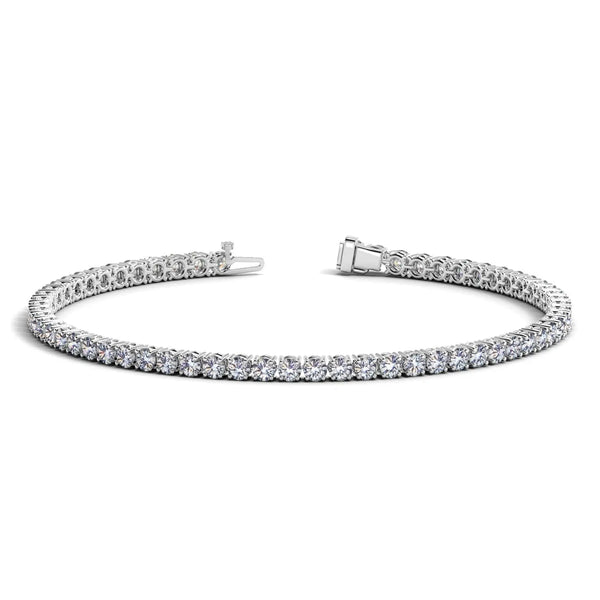
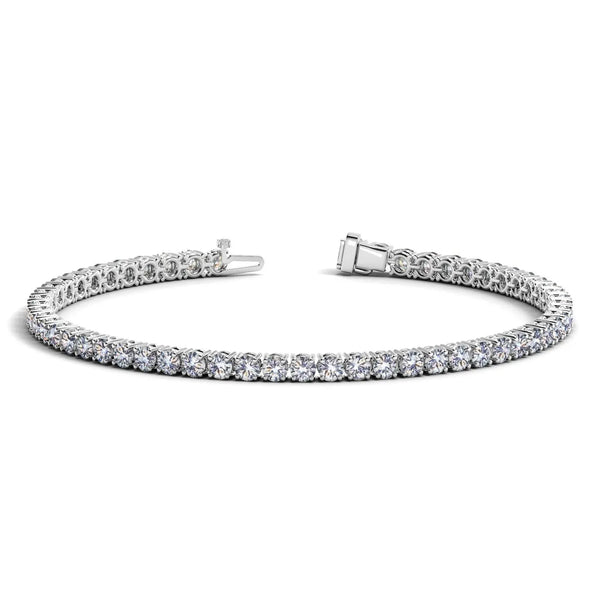
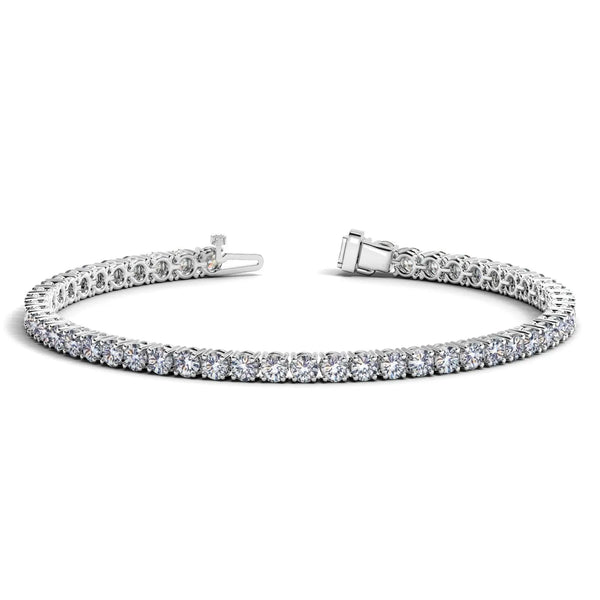
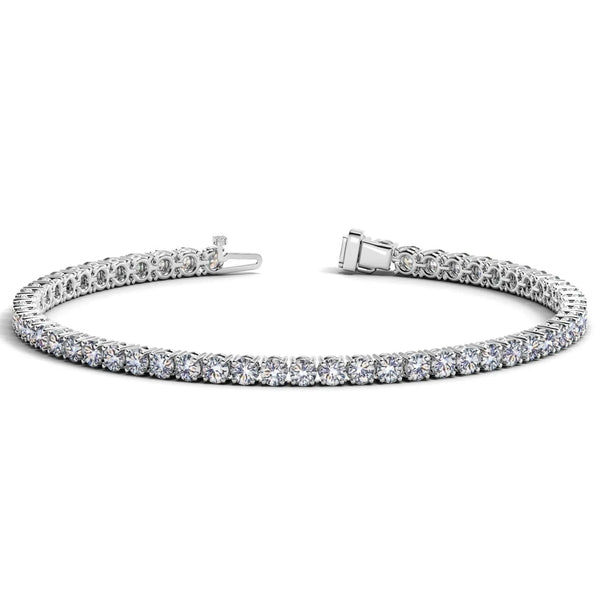
Total carat weight (cttw) in a tennis bracelet is the combined weight of every diamond in the strand — not the size of any single stone. It is the primary driver of the bracelet's visual presence: 2–3 cttw reads subtle and stackable, 4–5 cttw is the versatile middle, 6–8 cttw makes a clear statement, and 9–10 cttw is maximum presence, best worn alone.

Woman in a dark shirt raising her hand to show a diamond tennis bracelet

Quick Answer

Most tennis bracelets range from 2 to 10 total carats (cttw). There is no universally "correct" weight — the right carat weight is the one that matches your wrist size, budget, and how you plan to wear it (alone or stacked). 4–5 cttw is the most versatile starting point for a first tennis bracelet.

Written by Arta Talachian, Master Goldsmith & Certified Gemologist | Last updated: July 2026

Quick Answer

Most tennis bracelets range from 2 to 10 total carats (cttw). There is no universally "correct" weight — the right carat weight is the one that matches your wrist size, budget, and how you plan to wear it (alone or stacked). 4-5 cttw is the most versatile starting point for a first tennis bracelet.

Key Takeaways

  • Total carat weight (cttw) is the combined weight of every diamond in the strand, not one stone.
  • 2-3 cttw is subtle and stacks well; 9-10 cttw is a standalone statement piece.
  • Wrist size changes how the same carat weight reads — a 5 cttw bracelet looks different on a 14 cm wrist than on a 17 cm wrist.
  • Lab-grown diamonds make higher carat weights accessible at a fraction of natural-diamond pricing.

Carat Weight, Carat by Carat

2-3 cttw — Subtle and Everyday

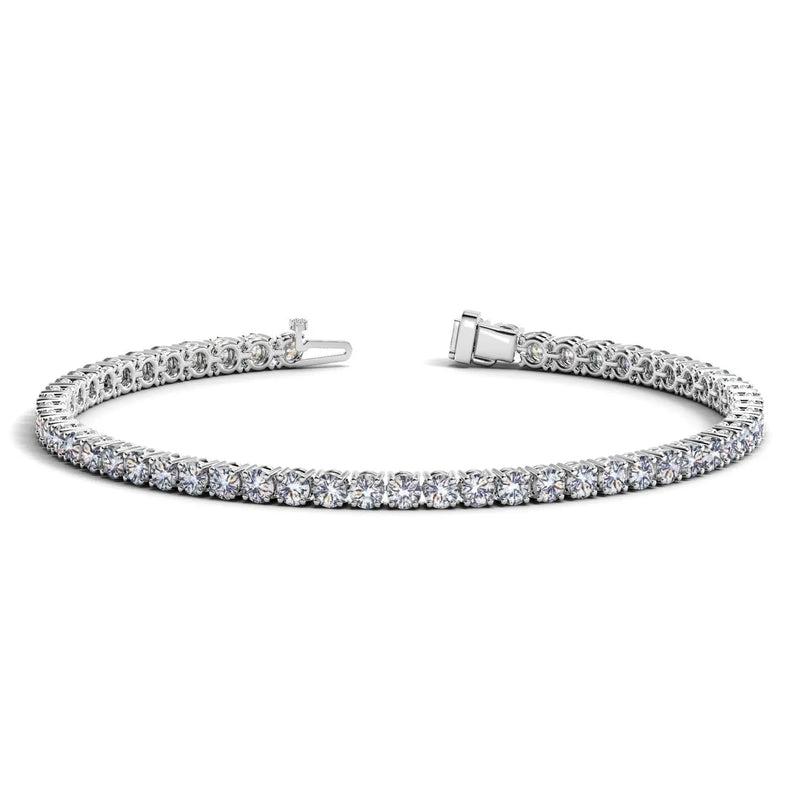
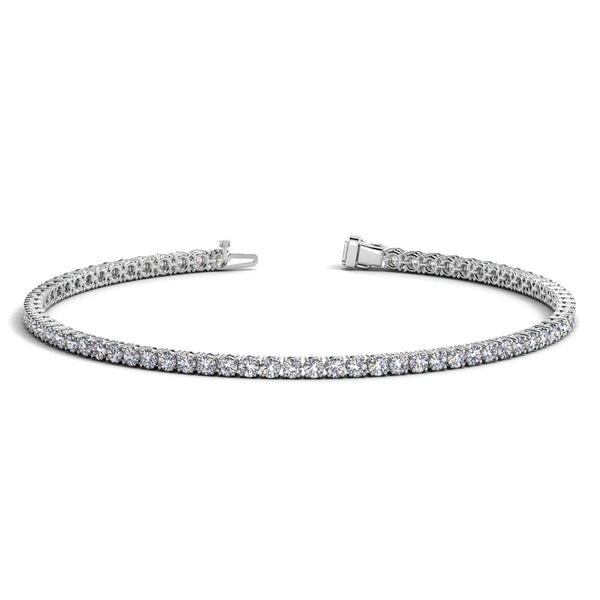
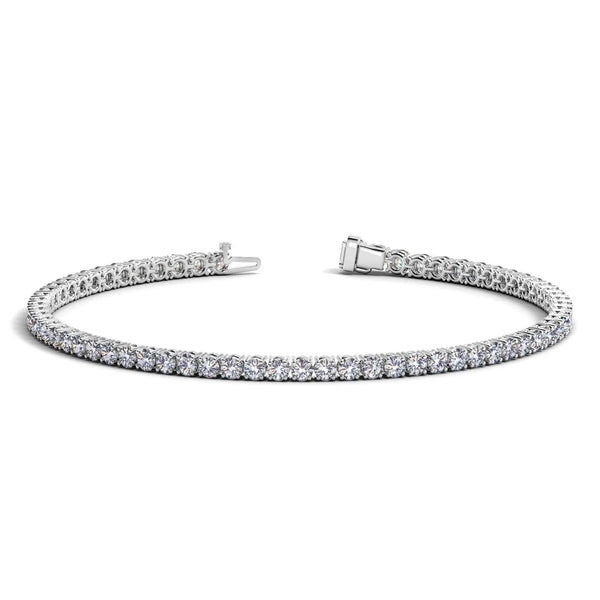
The individual stones are small, but the continuous line of diamonds still reads clearly on the wrist. This is the range most people choose for a first fine jewellery purchase, for daily wear, or for stacking with other bracelets — the thinner profile layers naturally without competing for attention.

4-5 cttw — The Versatile Middle

This is the range most buyers land on. It has noticeable presence without being overpowering, and it works equally well worn alone or stacked with one or two other pieces. If you are unsure which weight to choose, 4-5 cttw is the safest starting point.

6-8 cttw — A Clear Statement

Individual stones become clearly visible at this range. A bracelet in this weight commands attention on its own and is best worn as the focal piece — minimal other jewellery on the same wrist.

9-10 cttw — Maximum Presence

The largest range DEEVE offers within the 2-10ct locked range. High-visibility, high-brilliance, and best worn as a standalone piece rather than stacked — at this weight, additional bracelets compete rather than complement.

How Wrist Size Changes the Read

The same carat weight looks different depending on wrist size. A 4 cttw bracelet on a smaller wrist (14-15 cm) reads as more substantial than the identical bracelet on a larger wrist (17-18 cm), where the same total diamond weight is spread across more visible length. If your wrist is on the smaller side, you can often choose a lower carat weight than you'd expect and still get strong visual presence. For exact sizing, see our tennis bracelet sizing guide.

Choosing by How You'll Wear It

  • Planning to stack? Choose 2-4 cttw. Lower carat weights layer more naturally alongside other bracelets.
  • Want a standalone statement? Choose 6ct and up. At higher weights, the bracelet is the piece — skip stacking.
  • Not sure yet? 4-5 cttw works in both scenarios, which is why it's the most popular range.

Carat Weight and Budget

Because DEEVE bracelets use lab-grown diamonds, carat weight scales in price far more accessibly than with natural diamonds — lab-grown stones deliver the same guaranteed F-G colour and VS2-SI1 clarity at a fraction of natural-diamond cost, which is what makes the higher end of the 2-10ct range realistic for more buyers.

Further Reading

Ready to find your carat weight?

Shop Tennis Bracelets → Size Guide →

What to remember

  • Total carat weight (cttw) is the combined weight of every diamond in the strand, not one stone.
  • 2–3 cttw is subtle and stacks well; 9–10 cttw is a standalone statement piece.
  • Wrist size changes how the same carat weight reads — 5 cttw looks different on a 14 cm wrist than a 17 cm one.
  • Lab-grown diamonds make higher carat weights accessible at a fraction of natural-diamond pricing.

How to Choose Your Carat Weight

In order

  1. Measure your wrist first — the same carat weight reads larger on a smaller wrist
  2. Decide how you'll wear it: stacking favours 2–4 cttw; a standalone statement favours 6 cttw and up
  3. Confirm the total carat weight (cttw) — it is the combined weight of every stone in the strand, not one diamond
  4. Compare adjacent weights — the visual step between neighbouring weights is smaller than most buyers expect
  5. Set your budget before choosing — lab-grown pricing often puts the next weight up within reach

From the bench

4–5 cttw is the most versatile range if you're undecided — it works worn alone or stacked

DEEVE's collection runs 2 ct to 10 ct in solid 14K gold with F–G colour and VS2–SI1 clarity matched across every stone

Mentioned above 5 Carat Lab Grown Diamond Tennis Bracelet in 14K Gold $3,994.00 View the piece

0 comments

Leave a comment

Please note, comments need to be approved before they are published.

Clients often assume they should buy the largest bracelet their budget allows. In practice, the two questions that matter most are how the weight sits on your wrist and what you'll wear beside it. I've seen a 3 cttw strand outshine an 8 cttw one simply because it fit the wrist — and the wardrobe — it joined.
— Arta Talachian, 5th-Generation Master Goldsmith & Certified Gemologist

Buying Guide

How to Choose a Lab-Grown Diamond Tennis Bracelet

Carat weight sets the overall presence of the bracelet: 2–3ct suits subtle, everyday wear; 4–5ct is the most popular range for noticeable brilliance; 6–7ct makes a bold statement; 8–10ct is reserved for maximum impact. Metal colour is a matter of preference rather than durability — yellow gold offers a warm, classic look, while white gold has a cooler finish that maximizes diamond brilliance. Both are solid 14K gold on every DEEVE tennis bracelet, never plated or vermeil.

Read the complete buying guide

FAQ

Questions, answered.

How many carats should a tennis bracelet be?
Most tennis bracelets range from 2 to 10 total carats (cttw). 2-3 cttw is subtle and everyday; 4-5 cttw is the most versatile, balanced choice; 6-8 cttw makes a clear statement; 9-10 cttw is maximum presence, best worn alone. The right weight depends on wrist size, budget, and whether you plan to stack or wear it solo.
Is a 2 carat tennis bracelet too small?
No. A 2 cttw tennis bracelet is a genuine, wearable size — subtle and refined rather than small. It's a popular choice for everyday wear, layering with other bracelets, or a first fine jewellery purchase.
What is a good carat weight for a tennis bracelet?
4-5 cttw is the most commonly recommended range because it's versatile enough to wear alone or stacked, and substantial enough to have visual presence without being a full statement piece.

The DEEVE Standard

Every DEEVE tennis bracelet is crafted in solid 14K gold — never plated or vermeil — and set with lab-grown diamonds that are physically and chemically identical to mined diamonds, with guaranteed F–G colour and VS2–SI1 clarity matched across every stone. Each bracelet ships free worldwide with full insurance and tracking, and is backed by a lifetime warranty against manufacturing defects.

Found Your Carat Weight? Shop 2ct to 10ct

Lab-grown diamonds, solid 14K gold, lifetime warranty. Free worldwide shipping in 5–7 business days.

Shop Tennis Bracelets