Engagement rings
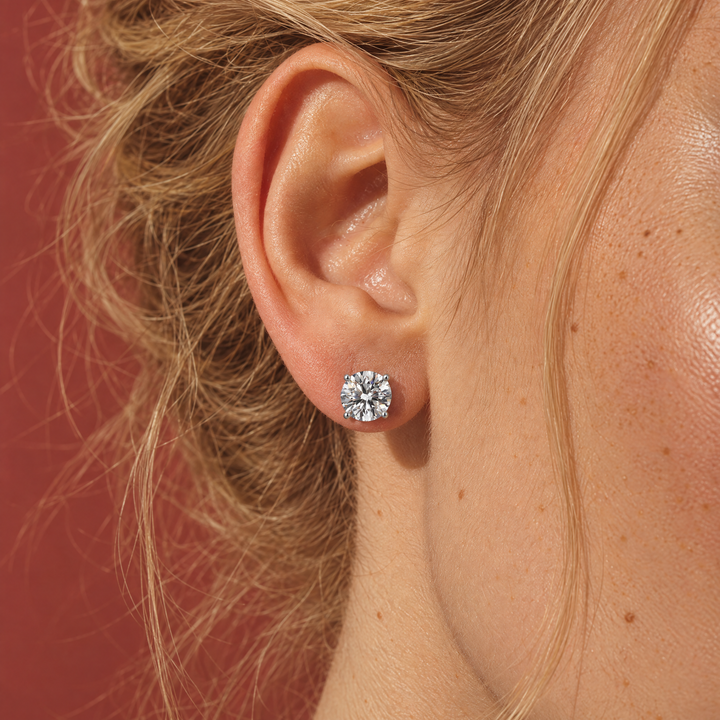
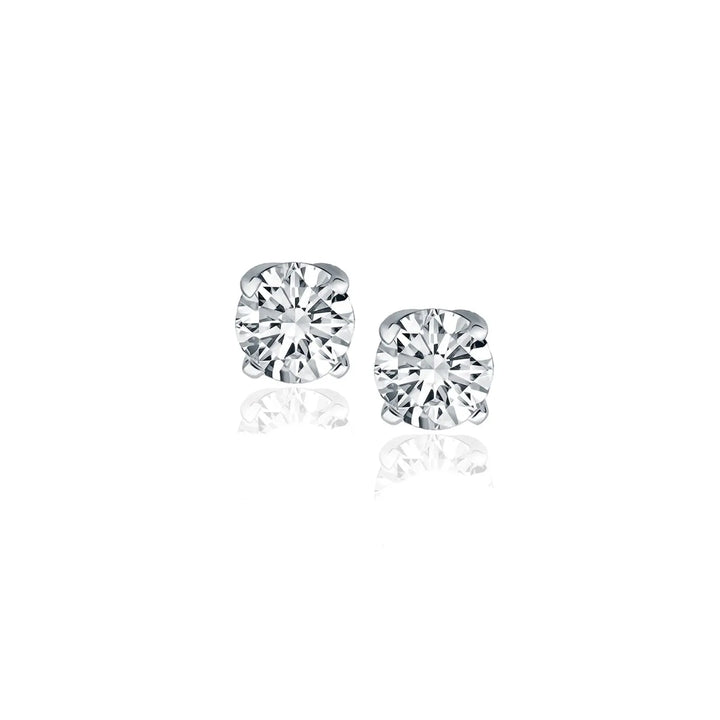
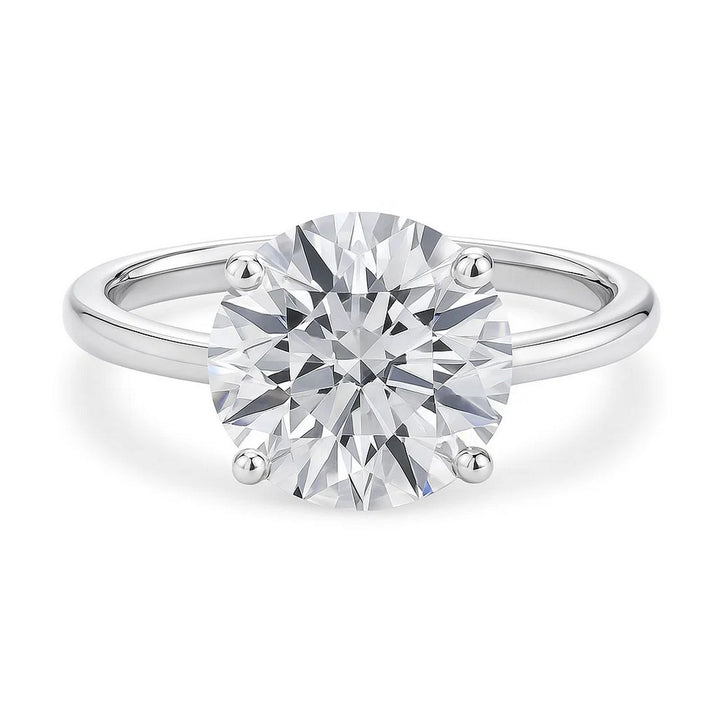
The single-stone half of the same decision — six cuts, one to five carats.
A proposal
View the collectionSome rings mark a beginning. An eternity ring marks the part of the story you're already living — the diamonds run unbroken the whole way around, which is the point: no beginning, no end.
In Brief
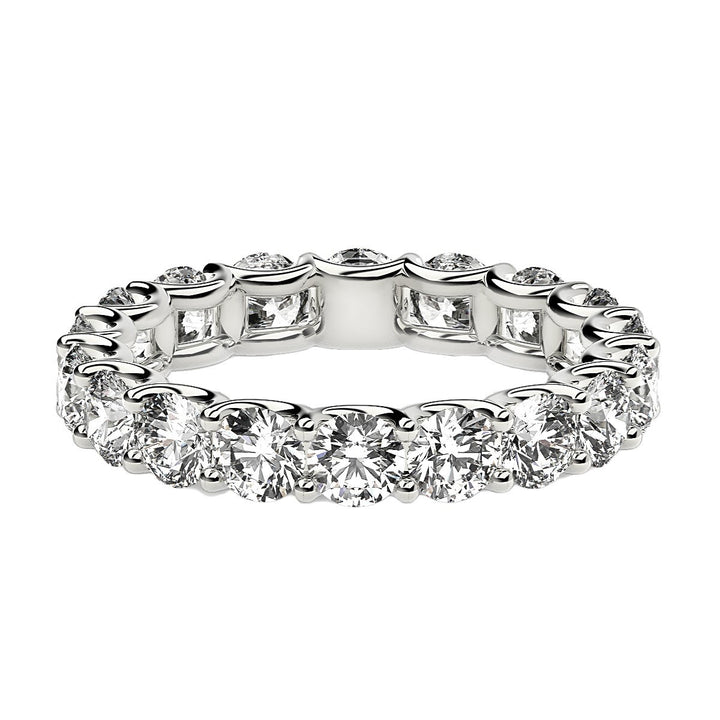
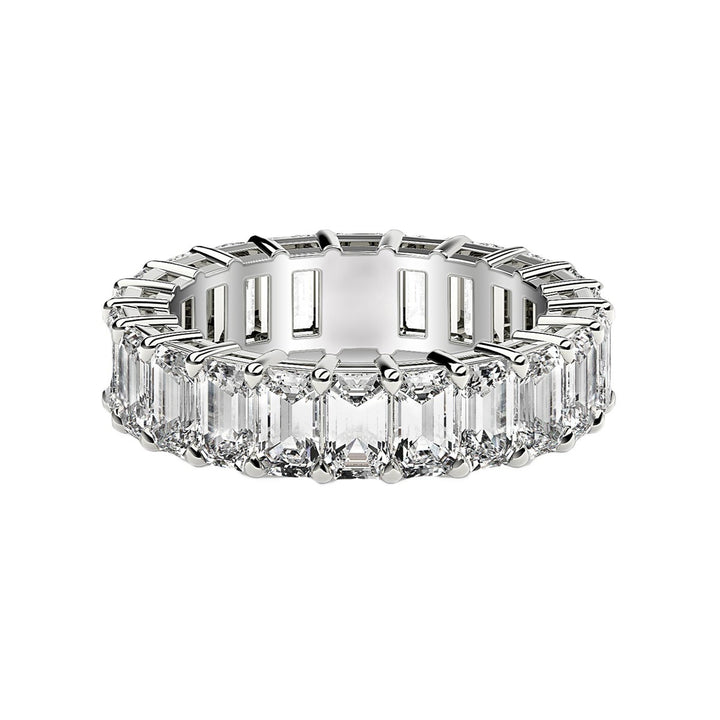
Every ring in this collection is set with lab-grown diamonds — F–G colour, VS2–SI1 clarity — running unbroken the whole way around in solid 14K white gold finished with rhodium, and comes with an AGI certificate from the Accredited Gemological Institute. Because the diamonds are grown, a true full eternity stays within reach from two carats to eight, made to order in sizes 4 through 8 including half sizes, with the emerald cut designs running to size 9.
The single-stone half of the same decision — six cuts, one to five carats.
A proposal
View the collectionWhat lab-grown means: identical to mined diamond in every physical property, and independently graded.
Understanding the stone first
View the collectionEngagement and eternity in one place.
Seeing the full range
View the collectionCompare
Both are diamond. The difference is where the carbon crystallised, and what that changes is grading, cost, and the carat weight within reach at a given budget.
| Lab-Grown | Natural | |
|---|---|---|
| CompositionChemically, physically and optically identical. Origin is the only difference. | Crystallised carbon | Crystallised carbon |
| Grading | Independently graded. Single-stone pieces — engagement rings, studs — include an individual IGI certificate; tennis bracelets and eternity bands come with an AGI certificate. | Conflict-free and responsibly sourced. |
| Cost at equal specificationThe figure DEEVE states storewide. | Approximately 70% less | Market price |
| Carat weight within a given budget | Higher — a full eternity band at 2 to 8 carats stays within reach | Lower at the same specification |
| Hardness and daily wearNo difference in durability. | 10 on the Mohs scale | 10 on the Mohs scale |
Neither is the better stone. Lab-grown suits a larger carat weight within a set budget, and arrives independently graded — with an individual IGI certificate on single-stone pieces and an AGI certificate with every tennis bracelet and eternity band. Natural suits a preference for a stone formed over geological time, and is conflict-free and responsibly sourced. The choice is one of priority, not quality.
Collection Specifications
Buying Guide
Round brilliant carries classic fire; emerald cut reads as a calmer, architectural line of light
Lab-grown diamonds are chemically, physically, and optically identical to mined — graded on the same colour and clarity scales — which is what makes a full circle of F–G, eye-clean diamonds possible at these carat weights
Eternity rings are made to size rather than resized afterward — confirm your size before ordering
The Guide
The DEEVE Standard
FAQ
The diamonds run the whole way around the band, with no beginning and no end — a circle that stands for something continuing. Eternity rings traditionally mark anniversaries, the birth of a child, or a promise renewed.
Yes. Every ring is set with lab-grown diamonds — chemically, physically, and optically identical to mined diamonds — in F–G colour and VS2–SI1 clarity, grown by the CVD process.
Yes. Every ring in this collection comes with an AGI certificate from the Accredited Gemological Institute, an independent gemological laboratory in New York. The certificate is issued for the ring as a whole rather than for each stone.
Round brilliant returns the most light — a continuous ring of fire around the finger. Emerald cut is calmer: long, stepped facets that read as a clean, architectural line. Neither is the upgrade; they are two different temperaments.
2–3ct sits quietly on the hand for every day. 4–5ct brings clear presence. 6–8ct sets the full width of the band with diamonds and is felt as well as seen — band width grows with carat weight, from about 2.9mm to 6.4mm.
Most sizes are already in stock — every eternity ring comes in sizes 4 through 8, including half sizes, chosen at checkout, and the emerald cut designs run to size 9. Because the diamonds run the full way around, an eternity ring is made to size rather than resized afterward; if you need a size outside the standard range, our in-house workshop takes orders, in two to six weeks depending on the design.
Traditionally on a milestone anniversary or the birth of a child — though there is no rule. It is the ring for a moment worth marking inside a story that is still being written.
Yes. Every DEEVE eternity ring includes a lifetime warranty covering manufacturing defects.
Yes — a diamond eternity ring is often chosen as a wedding or anniversary band, worn on its own or stacked beside a solitaire. Match the metal to your engagement ring and the two sit together cleanly; because the diamonds run the full way around, the band reads the same from every angle. For pairing guidance on a specific ring, write to support@deeve.ca.
From the Journal
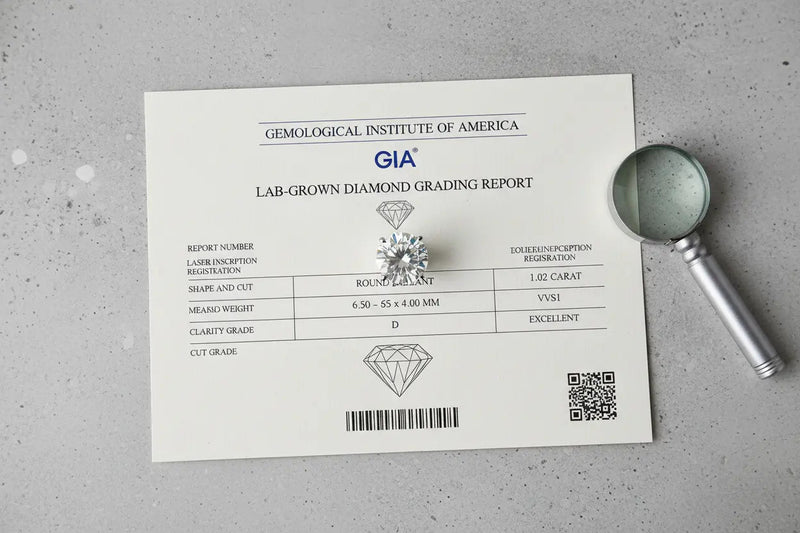 What Is an IGI Lab Grown Diamond Certificate — and How Do You Read One?
Read the guide
 Diamond Certificates & Grading Reports: IGI, GIA & What They Mean
Read the guide
 IGI vs GIA for Lab-Grown Diamonds: Which Certificate Should You Trust?
Read the guide
 Lab-Grown vs Natural Diamonds: Are They Really the Same?
Read the guide
 Lab-Grown Diamond Myths Debunked: What's True, What's Marketing?
Read the guide
 How Are Diamonds Formed? Natural vs Lab-Grown Formation Explained
Read the guide
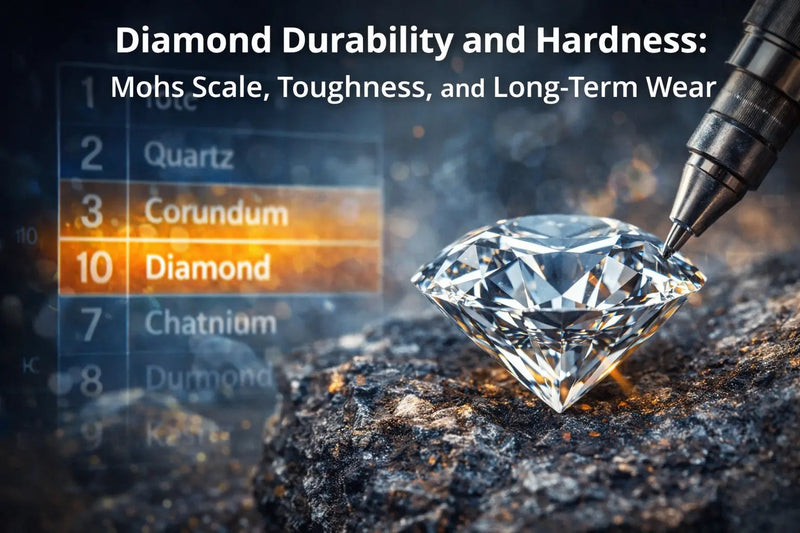 How Durable Are Diamonds? Hardness, Toughness & Long-Term Wear Explained
Read the guide
 The Complete Lab-Grown Diamond Guide: Everything You Need to Know Before You Buy
Read the guide
 Lab-Grown Diamond Price Per Carat in Canada: October 2026 Index
Read the guide
 Lab-Grown vs Mined Diamonds: Which Is Better for the Environment?
Read the guide
 Are Diamonds Ethical? Conflict-Free, Kimberley Process & Traceability Explained
Read the guide
 Diamond Brilliance, Fire & Scintillation: What Makes a Diamond Sparkle?
Read the guide
 What Is a Type IIa Diamond? The Purest Diamond Explained
Read the guide
 Understanding GIA Reports: Grading & Verification
Read the guide
 What Is an HRD Diamond Certificate — and Should You Trust It for Lab-Grown Diamonds?
Read the guide
 GIA vs HRD Diamond Certificates: Which Is Better for Lab-Grown Diamonds?
Read the guide
 What Is a Lab Grown Diamond? Science, Quality & Why They're Real
Read the guide
Recommended pieces
About this collection
Some rings mark a beginning. An eternity ring marks the part of the story you're already living — an anniversary, a first child, a promise renewed. The diamonds run unbroken the whole way around, which is the point: no beginning, no end.
Every ring here is set with lab-grown diamonds — F–G colour, VS2–SI1 clarity — in solid 14K white gold finished with rhodium, and comes with an AGI certificate from the Accredited Gemological Institute. Round brilliant carries classic fire; emerald cut reads as a calmer, architectural line of light. And because the diamonds are grown, a true full eternity — not a half band — stays within reach from two carats to eight.
Eternity rings are made to order in sizes 4 through 8, including half sizes, chosen at checkout; the emerald cut designs run to size 9. Because the diamonds run the full way around, an eternity ring is made to size rather than resized afterward — allow two to six weeks depending on the design.
Lab-grown diamonds are chemically, physically, and optically identical to mined diamonds, graded on the same scales for colour, clarity, and cut. What changes is what becomes possible: a full circle of F–G, eye-clean diamonds — at carat weights that would otherwise stay out of reach. Learn how diamond grading works in our guide to diamond grading.
A short welcome, then new pieces and the occasional note from the workshop — no more than monthly. A few welcome emails first, then one letter a month at most, plus a reminder about pieces you viewed or left in your cart. Unsubscribe in a click. View our privacy policy and terms of service for more info.