


The main types of bracelets are the chain bracelet, the tennis bracelet, the bangle, the cuff, the woven or braided bracelet, the mesh bracelet and the bead bracelet. Each is defined by how it is built and how it closes. Our bracelets collection carries all of them in 14K gold, 85 pieces in seven types, and the chart below counts and measures every one from its product record.
Types of Bracelets: Every Style We Carry, Counted and Measured
The chart groups our 85 bracelets by the type each product record files them under, and gives the widths those records list today, from the product title or its specification sheet. A type with no width range means its records do not list one. Closures are the ones the records name; where a record names none, it is not counted.
| Type of bracelet | How it is built | Pieces in our collection | Widths as listed | How it closes |
|---|---|---|---|---|
| Chain bracelet | Linked metal, flexible along its length | 40 | 1.60 mm to 9 mm | Lobster clasp on most that list one; also box clasp and spring ring |
| Bangle | A rigid circle, closed or opening on a hinge or clasp | 23 | 1.80 mm to 20.40 mm | Snap lock or lobster clasp where listed; hinged pieces open on a hinge |
| Tennis bracelet | A single line of individually set diamonds | 8 | Box clasp with a hidden safety | |
| Cuff | A rigid band with a permanent opening | 5 | 3 mm to 3.9 mm | Open, flexible or omega cuff |
| Woven or braided bracelet | Strands of gold braided or woven together | 4 | 3.75 mm to 14.50 mm | Lobster clasp, box clasp or a secure clasp |
| Mesh bracelet | A stretch mesh band | 3 | 3.40 mm to 8.80 mm | No clasp: it stretches over the hand |
| Bead bracelet | Round gold beads on a strand | 2 | 4 mm | Lobster clasp or snap lock |
Chain bracelets are the largest group, 40 of the 85, in styles from the 2.50 mm paperclip chain bracelet to the solid Miami Cuban bracelet at 6.10 mm. Bangles come next at 23, and the widest piece in the collection is a bangle-family cuff, the classic cuff bangle at 20.40 mm. The eight tennis bracelets list no width; they differ in total diamond weight instead. The chart files cuffs as the records do: five pieces carry the cuff type, and more open cuffs sit among the bangles.

What is the most common type of bracelet?
In our collection the chain bracelet is the most common type by a wide margin: 40 of our 85 bracelets are chains, against 23 bangles and 8 tennis bracelets. A chain bracelet is a length of linked gold that bends with the wrist and closes with a clasp, usually a lobster clasp. Its styles change with the link, from paperclip and rolo to Miami Cuban, figaro and rope.
What are the types of gold bracelets?
Every bracelet in our collection is 14K gold, so the types of gold bracelets are the same seven types: chain, bangle, tennis, cuff, woven or braided, mesh and bead. Most come in yellow gold; some are offered in white, rose or two-tone gold, as each record lists. Within the chain type, the link style names the bracelet, such as Miami Cuban, figaro, rope, wheat or herringbone.
 Mentioned in this piece
Solid Miami Cuban Bracelet in 14K Yellow Gold | 6.10mm
$7,776.00
View the piece
Flexible Bracelets: Chain, Tennis, Woven, Mesh and Bead
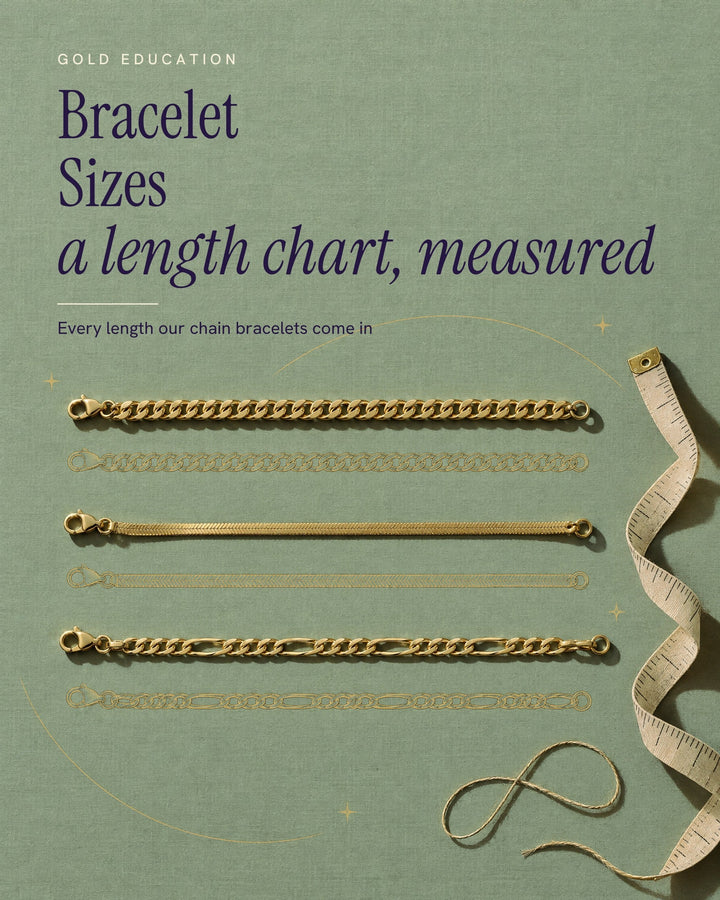
Five of the seven types are flexible: they bend with the wrist and close with a clasp or, in the case of mesh, stretch over the hand. A flexible bracelet is sized by length rather than by inside diameter, which is why our bracelet sizes guide measures the wrist and adds room for the bracelet to move.
A chain bracelet is named for its link. Our chain records include paperclip, rolo, Miami Cuban, Franco, rope, figaro, curb, herringbone, wheat, Byzantine, Singapore, mariner and tubogas links. The narrowest listed is a 1.60 mm diamond-cut rope chain bracelet, and the widest is the tubogas link bracelet at 9 mm. For a closer look at the link styles themselves, our guide to the types of gold chains covers each one.
A tennis bracelet is a single continuous line of individually set diamonds. Our eight are lab-grown diamond strands in 14K white or yellow gold, each stone in a four-prong setting, closed with a box clasp and a hidden safety, and listed at 7 inches. Our tennis bracelet buying guide covers how they differ from strand to strand.

Woven and braided bracelets are made from strands of gold worked together rather than linked. The thick braided bracelet is the widest of the four at 14.50 mm and weighs 19.1 grams, and the narrowest is a 3.75 mm dual wheat chain bracelet with diamond stations. Mesh bracelets go a step further: our three are stretch mesh bands with no clasp at all, from 3.40 mm to 8.80 mm, such as the medium stretch mesh bracelet at 5.4 mm. Bead bracelets string round gold beads; the polished bead bracelet lists 4 mm beads, a lobster clasp and a length of 8 inches.
What is a 7 inch bracelet?
A 7 inch bracelet is a flexible bracelet, such as a chain or tennis bracelet, made 7 inches long. It is a length, not a wrist size, so the right one is a little longer than the wrist it goes on, to leave room to move. Our tennis bracelets are listed at 7 inches, and several of our chain and woven bracelets at 7 or 7.25 inches.
Rigid Bracelets: Bangles and Cuffs
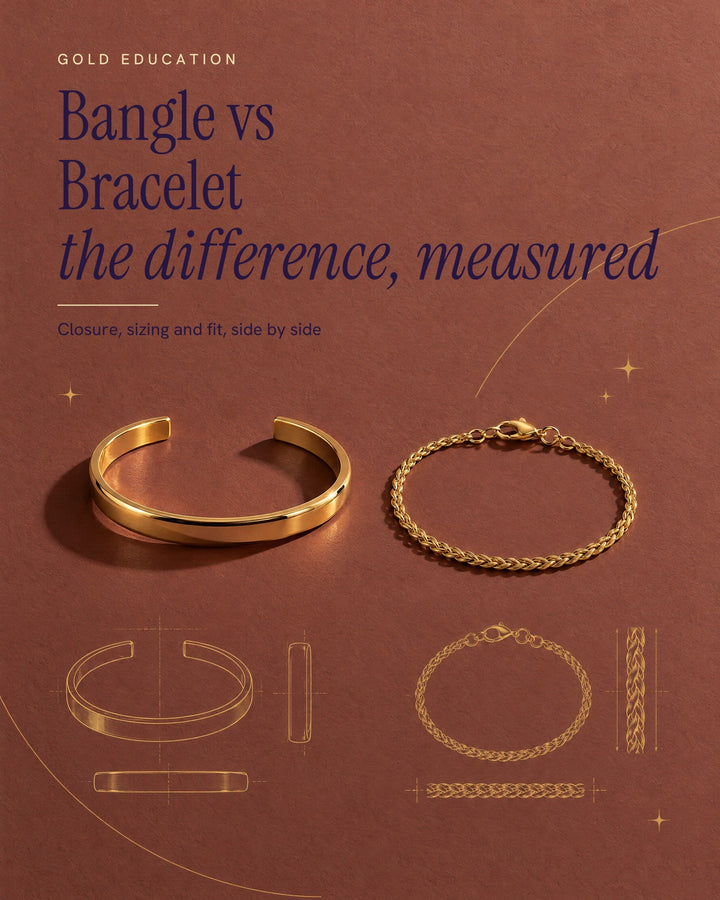
A bangle and a cuff are both rigid, so neither is sized by length the way a chain is. A bangle is a closed circle that slides over the hand or opens on a hinge or a clasp to go around the wrist. A cuff keeps a permanent opening and goes on from the side. Our bangle vs bracelet guide explains how the rigid and flexible types differ in wear.
Our 23 bangles run from a 1.80 mm diamond-cut stack bangle to the 20.40 mm classic cuff bangle. They include hinged bangles such as the mariner link hinged bangle at 12 mm, and snap-lock pieces such as the twist bangle at 10 mm and 21.3 grams. Every cuff, with its width and closure, is measured in our guide to what a cuff bracelet is.
What are the different types of bangles?
Bangles divide by how they go on. A slip-on bangle is a closed circle passed over the hand. A hinged bangle opens on a hinge and locks shut around the wrist. A clasp bangle, like our twist bangles, opens with a snap lock clasp. An open cuff keeps a gap and goes on from the side, and a tubogas or omega cuff flexes around the wrist.
How to Choose Between the Types
The type decides how a bracelet fits, so start with how you want to put it on. A chain, tennis, woven or bead bracelet closes with a clasp and is chosen by length. A mesh bracelet stretches over the hand with no clasp. A bangle is chosen by its inside size, and a cuff by how its opening sits against the wrist. Width then sets how the piece reads: under about 3 mm a bracelet sits as a fine line, while the wider chains, braids and bangles become the main piece on the wrist.
Compare every style in our bracelets collection, or start with the solid Miami Cuban bracelet if you want a chain with weight to it. For bangles, our bangle size chart lists every size.
Warranty. Every DEEVE piece carries a lifetime manufacturer's warranty for the original purchaser, serviced in-house, with complimentary cleaning, inspection and prong tightening for the life of the piece and rhodium re-plating on white gold at no charge. Read the warranty.



0 comments